
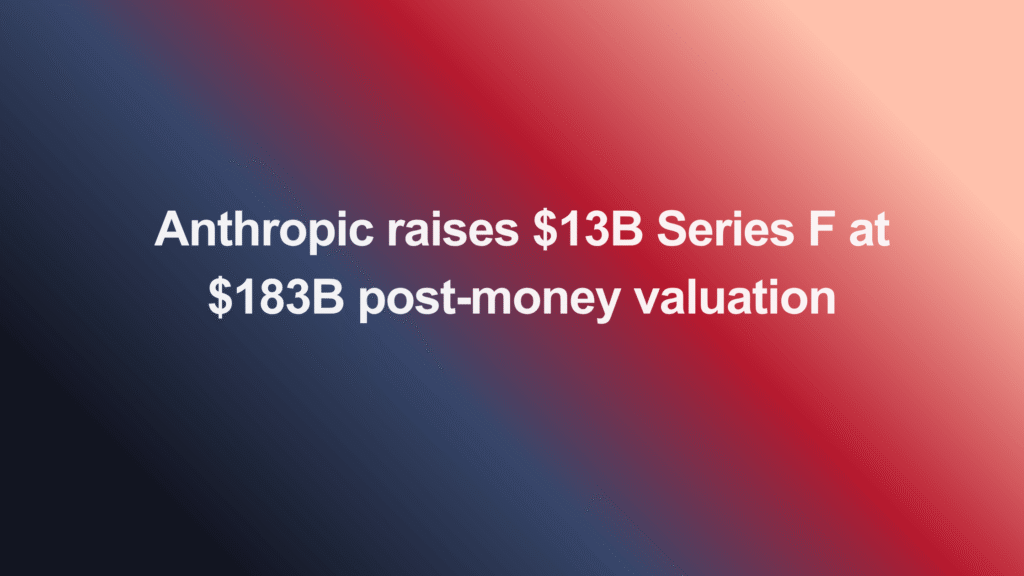
In September 2025, Anthropic closed a $13 billion Series F round. This is the largest AI funding deal ever recorded. Lightspeed Venture Partners led the round. Other investors included Fidelity Management, Salesforce Ventures, Google Ventures, and Amazon Alexa Fund.
We can’t see Anthropic’s actual pitch deck. But we can look at public information about their growth and strategy. This helps us understand why investors gave them so much money.
Who Founded Anthropic and Why Does It Matter?
Dario Amodei and Daniela Amodei founded Anthropic in 2021. Both worked at OpenAI before starting their own company. Dario was VP of Research at OpenAI. He led the teams that built GPT-2 and GPT-3. Daniela was VP of Operations. Other former OpenAI researchers joined them. They left to focus more on AI safety.
The founders’ backgrounds matter a lot to investors. Teams that built successful AI systems before get more attention. This track record shows they know how to build advanced technology.
What Is Anthropic’s Core Product?
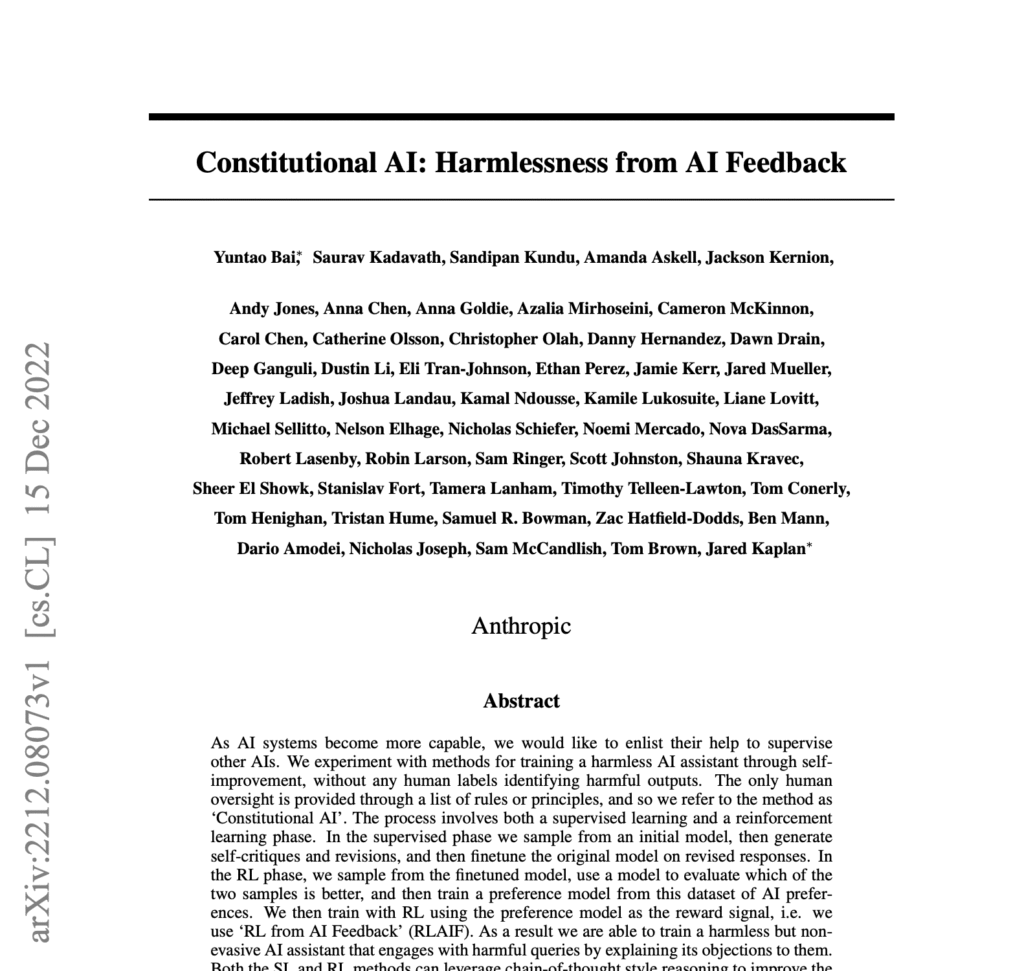
Anthropic makes Claude. Claude is a family of AI models that can understand and write text. The company focuses on making Claude safe and reliable. They created a training method called “Constitutional AI.” This method uses a set of rules to guide how the AI behaves. They published a research paper about this in December 2022.
People can use Claude in different ways. Regular users go to Claude.ai on their web browser. Software developers can add Claude to their apps through an API. Big companies can use Claude through Amazon Web Services or Google Cloud Platform.
What Growth Numbers Does Anthropic Report?
Reports from September 2025 said Anthropic was making about $1 billion per year in mid-2024. Recent reports say their revenue has grown a lot since then. But the company hasn’t shared exact numbers publicly.
Anthropic works with over 200 big companies. These include Salesforce, Notion, and DuckDuckGo. The company shared this information in various product announcements. Millions of people use the free version of Claude. But Anthropic hasn’t shared exact user counts.
The company has over 500 employees as of 2024. They hire mostly AI safety researchers and machine learning engineers.
How Does Anthropic Make Money?
Anthropic makes money in three main ways. First, they sell API access. Customers pay based on how much they use Claude. The price depends on which version of Claude they pick. Claude Haiku is the cheapest and fastest. Claude Opus is the most powerful and costs more.
Second, they sell Claude Pro subscriptions. Individual users pay $20 per month in the United States. This gives them more usage and faster responses during busy times.
Third, they work with big companies on custom deals. These often include dedicated servers, guaranteed uptime, and special features. Companies usually sign contracts for multiple years. Anthropic hasn’t shared how much money comes from each source.
Who Are Anthropic’s Main Competitors?
OpenAI is the market leader. Their product ChatGPT uses GPT-5. Many people and companies use ChatGPT. OpenAI works with Microsoft and has many big customers.
Google competes with Gemini (they used to call it Bard). Google puts Gemini in many of their products. Companies can also use it through Google Cloud. Google has lots of money and AI researchers.
Other competitors include Mistral AI from Europe. They make both open-source and paid models. Meta releases free AI models called LLaMA that anyone can use. Each company has different strengths in terms of power, price, and safety features.
What Makes Constitutional AI Different?
Constitutional AI is Anthropic’s main technical advantage. Most AI training requires humans to rate thousands of responses. This tells the AI what’s good and bad. Constitutional AI works differently. It uses a set of written principles or rules. The AI checks its own work against these rules. Then it learns from those self-checks.
Anthropic published research papers about this method. Their main paper is “Constitutional AI: Harmlessness from AI Feedback” from December 2022. The paper shows this approach reduces harmful outputs.
This matters for big companies. They worry about AI saying harmful or wrong things. Constitutional AI builds safety into the training process. This is better than trying to filter bad outputs after the AI is already trained.
How Much Computing Power Does AI Need?
Training advanced AI models takes huge amounts of computer power. Computing power for top AI models doubles about every six months since 2012. The biggest models now need tens of thousands of special AI chips. These chips run for months to train one model.
Training one top AI model can cost over $100 million. Industry analysts estimate these costs. This includes the chips, electricity, cooling systems, and infrastructure to coordinate everything.
Running these models for users also costs a lot. Every question sent to a large AI model uses computing power. The cost depends on the model size and how long the question and answer are. Companies serving millions of questions daily need massive infrastructure.
This explains why AI startups need billions of dollars. Much of the money goes directly to buying or renting computing power. It’s not just for hiring people or marketing.
What Partnerships Has Anthropic Made?
Anthropic partnered with Amazon in September 2023. Amazon invested $1.25 billion. They made Claude available on Amazon Bedrock. This is AWS’s service for AI models. Later, Amazon invested another $2.75 billion. Their total investment reached $4 billion.
Google also partnered with Anthropic. Google invested $300 million. They added Claude to Google Cloud’s Vertex AI platform. Google later invested more money in other funding rounds.
These partnerships bring more than money. Anthropic gets access to powerful computing systems at lower costs. They can sell Claude through cloud marketplaces. They work with partners to reach big companies. For Amazon and Google, offering Claude gives customers more choices. This helps keep those customers using their cloud services.
What Are the Biggest Risks in the AI Market?
The AI market has several major challenges. All companies face these, including Anthropic. Government rules are getting stricter. The European Union passed the AI Act in 2024. Other countries are making new AI laws too. These rules could change how companies train models and use data.
Open-source AI also creates challenges. Meta released LLaMA 2 and LLaMA 3 for free. Anyone can use and change these models. If free models become as good as paid ones, it could hurt companies like Anthropic.
Competition from tech giants is tough. Google and Microsoft have unlimited money to spend on AI. They can add AI to products they already sell. Competing against them requires either better technology or focusing on specific needs they ignore.
AI development costs a lot of money. If a company can’t keep improving their models, they fall behind. But spending too much without growing revenue creates money problems. Companies need to balance these carefully.
How Do Big Companies Choose AI Providers?
Big companies think about many things when choosing AI services. Research firms survey these companies. They care about data privacy, security certifications, reliable service, good support, and easy integration with existing systems.
Many companies want to use multiple AI providers. They don’t want to depend on just one company. This protects them if one provider has problems or raises prices. It also lets them use different models for different tasks based on cost and features.
Anthropic positions Claude as good for companies with strict safety needs. Constitutional AI makes behavior more predictable. This matters in healthcare, finance, and legal industries. Unpredictable AI could create compliance problems in these fields.
Who Runs Anthropic?
Beyond the founders, Anthropic hired experienced leaders. The company brought in people who know how to sell to big companies. They hired experts in business development and operations. These leaders worked at major tech companies and successful startups before.
The company also hired famous AI researchers. Several people from Google Brain, DeepMind, and OpenAI joined Anthropic. They work on safety research and building better models. Having many AI safety experts makes Anthropic different from competitors who focus only on making AI more powerful.
Anthropic’s board includes people from major investors. It also has independent directors with relevant experience. The board structure reflects both the company’s needs and investors’ desire for oversight. This matters when billions of dollars are invested.
How Does Safety Research Help Products?
Anthropic publishes research papers about AI safety. Topics include interpretability (understanding what happens inside AI models), alignment (making sure AI does what humans want), and safety techniques. These papers appear at major AI conferences.
Some research directly improves their products. For example, Anthropic studied “AI safety via debate.” This means using AI systems to check and improve each other’s work. Parts of this research appear in how Claude handles hard questions and fixes its own mistakes.
Other research may help in the long term. Work on mechanistic interpretability tries to understand the inner workings of neural networks. This could eventually let AI systems explain their thinking more clearly. This matters for companies in regulated industries where they need to explain AI decisions.
Publishing research does several things. It shows technical skill. It attracts top researchers who want to work on safety problems. It helps the whole AI safety field. This approach worked well for DeepMind and OpenAI in their early years.
What Market Trends Help Anthropic?
Several trends in the AI market help Anthropic’s approach. First, companies moved from testing AI to actually using it. Research shows more companies now use AI in their daily work.
Second, people worry more about AI safety now. Famous cases of AI saying biased or wrong things made companies more careful. Surveys found that executives list AI safety and ethics as top concerns.
Third, governments created more rules about AI. The EU AI Act, US executive orders, and other regulations affect how companies use AI. Companies with strong safety practices are better positioned to meet these requirements.
Fourth, companies will pay more for reliable and safe AI. Early worries that AI would become cheap and common haven’t happened. Companies still pay significant amounts for AI services that meet their needs for safety, reliability, and support.
How Does Venture Capital Work at This Size?
Raising $13 billion in one round is very unusual. Most venture rounds are millions to hundreds of millions of dollars. Multi-billion dollar rounds only happen for companies with extraordinary growth or massive capital needs.
At this size, different types of investors participate. Traditional venture capital firms may lead. But they work with growth equity firms, hedge funds, sovereign wealth funds, and corporate investors. Each brings different time horizons and expectations.
These investors look at things differently than early-stage VCs. They focus heavily on revenue growth, how much it costs to get customers, market size, and paths to exit. At Anthropic’s scale, investors want to see a clear path to tens of billions in revenue. Eventually they want the company to go public or get acquired.
The research process for rounds this size is very detailed. Investors do financial analysis, technical evaluation, market research, and reference checks. They look at competition, intellectual property, key person risk, and many other factors. This process usually takes months.
What Exit Options Exist for AI Companies?
Companies that raise billions need large exits to give investors good returns. For AI companies at Anthropic’s scale, realistic options include going public or getting bought by a major tech company.
The stock market has shown interest in AI companies. Companies like Palantir successfully went public. An AI company with several billion in revenue and strong growth could reach a public market value of tens to hundreds of billions. This depends on growth rates and market conditions.
Getting acquired is another path. Microsoft bought Nuance for $19.7 billion. This shows big tech companies will pay premium prices for strategic AI capabilities. However, government scrutiny of big tech buying other companies has increased. This makes some deals harder to complete.
The path to exit affects fundraising strategy. Companies raising at very high values need to show a path to even higher values later. This requires either exceptional growth rates or a market position that would make them attractive to the few companies big enough to buy them.
Frequently Asked Questions
Anthropic raised $13 billion in their Series F round in September 2025. This made it the largest AI funding round in history.
Lightspeed Venture Partners led the round. Other investors included Fidelity Management, Salesforce Ventures, Google Ventures, and Amazon Alexa Fund.
Constitutional AI is Anthropic’s training method. It uses a set of principles to guide AI behavior. The system evaluates and improves its own outputs based on these principles.
Anthropic partnered with Amazon Web Services (with a $4 billion investment) and Google Cloud Platform (with a $300 million investment). These partnerships make Claude available through their cloud services.
Dario Amodei and Daniela Amodei founded Anthropic in 2021. Dario was VP of Research at OpenAI. Daniela was VP of Operations at OpenAI. Other former OpenAI researchers joined them.
