

Money is no longer measured only by pay slips and property deeds. A growing number of earners now hold value in places that older financial models never counted.
That change has a name. It covers digital holdings, creator earnings, rare objects, and small niche bets that sit outside banks and stock markets.
What Weird Wealth Means in 2026
Weird wealth describes holdings and earnings that produce value away from standard money systems. Ordinary savings, shares, and land follow known rules. These do not.
Three traits mark it out. The asset is rarely treated as real wealth, its worth is narrow or specialised, and its price can swing hard.
Why Weird Wealth Keeps Spreading
Web platforms opened earning routes that did not exist before, along with new ways to own something digitally.
Attitudes moved too. Buyers now put a price on originality, skill, and lived moments. Entry is also open. Almost anyone can launch a web venture or put small sums into a narrow market.
The Main Forms of Weird Wealth
| Category | What It Covers |
|---|---|
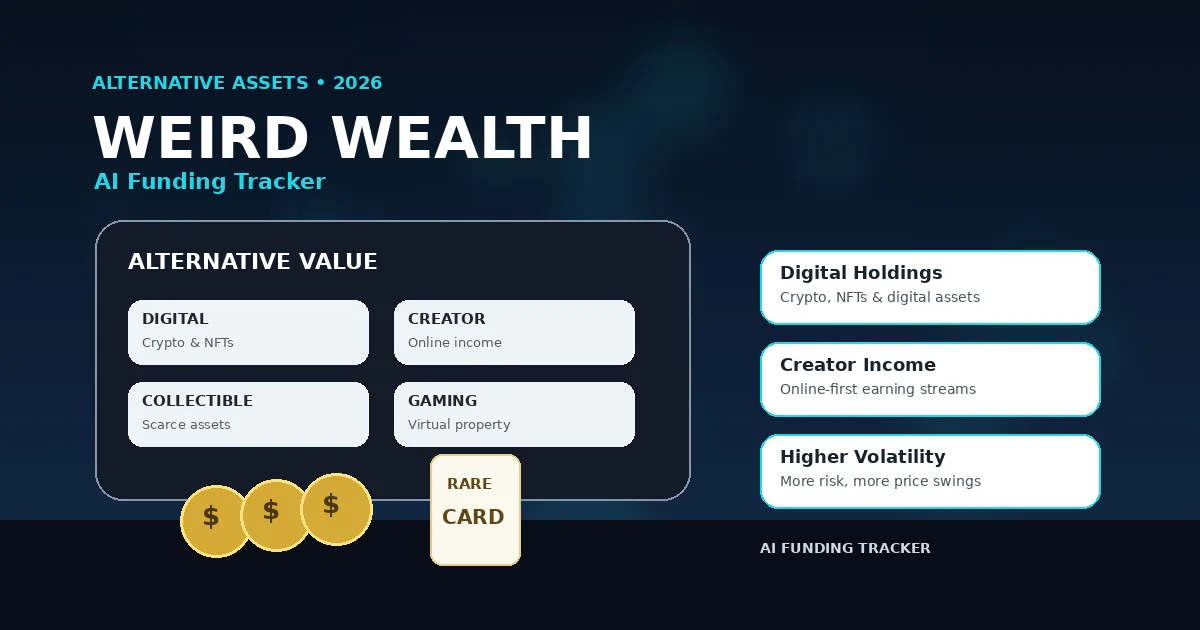
| Digital holdings | Crypto coins, NFTs, computer-made art |
| Creator earnings | YouTube pay, blog income, brand deals |
| Collectibles | Scarce cards, old goods, capped-run items |
| Side-market bets | Web addresses, virtual land, trading sites |
| Gaming property | In-game items and accounts |
One quiet source gets missed. Payouts from class action settlements over privacy, consumer, or faulty-goods claims can hand someone hundreds or a few thousand dollars for little more than filing a form and waiting. It is not steady pay, yet the sums mount up.
Weird Wealth Against Standard Holdings
| Measure | Standard Holdings | Weird Wealth |
|---|---|---|
| Steadiness | Strong | Changeable |
| Ease of entry | Restricted | Simple |
| Danger | Middling | Steep |
| Upside | Gradual | Steep |
Building Weird Wealth Step by Step
Spot rising trends first. Put in a small amount and see how it behaves before you commit more.
Spread your money across several holdings rather than one. Watch market shifts as they happen. Pair the odd assets with steady ones so a single fall cannot wipe you out.
Who Is Already Earning This Way
Content makers pull income from posting platforms. Traders buy and sell tokens and coins. Founders build businesses that exist only online.
Where the Numbers Point
Side-market investing is expanding quickly. Digital holdings keep drawing wider notice. Younger earners lean toward income routes that break from the old pattern.
Mistakes That Cost People Money
Buying without homework is the first. Chasing noise is the second. Skipping any plan for danger is the third, and pouring too much into wild-swinging assets is the fourth.
Do the reading. Split your money. Keep current. Judge holdings by what they are worth years out.
Gains, Dangers, and the Road Ahead for Weird Wealth
The pull is real: fast upside, earnings tied to what you make, and a low bar to start. The cost is price swings, thin rulebooks, and worth nobody can pin down.
Expect more online ownership, wider acceptance, and stronger legal cover as the years pass.
The shift is plain. Old-style finance is giving ground to a digital one, and fixed pay is giving ground to flexible earning. Mixing these holdings with conventional ones, backed by research and spread, remains the sounder way to grow money.
FAQ
What does weird wealth mean?
It means assets or earnings that create value away from standard money systems, such as digital holdings, creator income, and collectibles.
Is weird wealth dependable?
It can pay well, but it swings more sharply and carries greater danger than conventional holdings like shares or property.
What counts as weird wealth?
Tokens, web-based ventures, scarce collectibles, and money earned through online channels all fall into this group.
Can newcomers try weird wealth?
Yes. Beginners should commit small sums at first and learn the dangers attached to each holding before adding more.
How do I cut the danger?
Spread money across several holdings and never depend on unconventional assets alone. Pair them with steady, traditional investments.
